Hello, I'm Matthew
I started playing when I was nine, and for a slightly silly reason. I'd read in a newspaper that learning an instrument made you better at maths — and being a fairly maths-y kid at the time, I saw this as an excellent opportunity to get even better. So I started classical guitar lessons at school.
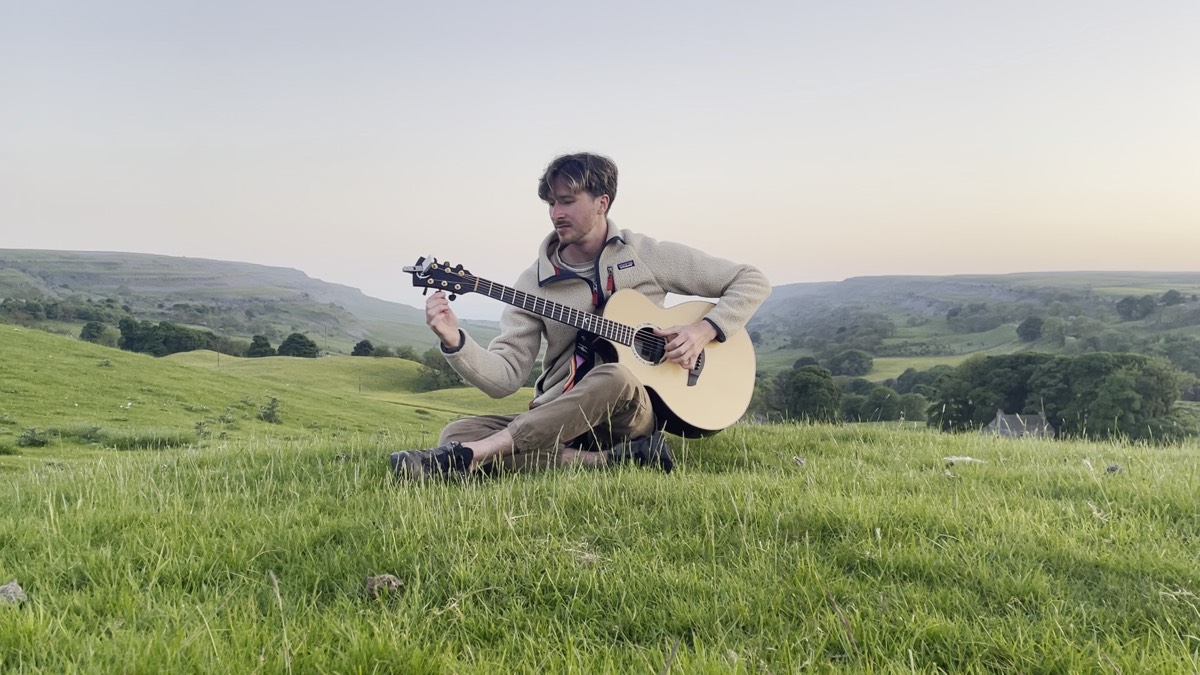
Why I kept going had nothing to do with maths in the end. I'm a second generation music teacher: my mum taught piano in our front room, and she showed me what practice actually looks like — four times a week, twenty minutes at a time. It isn't much. But it meant that at an age when I had no discipline of my own, I got a routine, and the routine let me see progress. Once you can see the fruits of your own effort, you've got a real reason to keep making it. That's a big part of what I try to pass on now.
There was music everywhere in our house. Mum teaching in the front room, my dad playing guitar and bass with friends — and the two of us playing piano together from when I was as young as three. We used to play Prokofiev's Dance of the Knights, with me on a very simple bass line while Dad played the melody.
Then at thirteen I formed a band with my friends, and that was where I really learned. We wrote our own songs knowing hardly any theory at all, played gigs with homemade t-shirts as merch, and recorded an EP that we sold on CD with our own logo printed on it. Not bad for a group of teens! Being on a stage playing your own music with your friends is a wonderful thing, and I want my students to have those experiences too.
Why I teach
My first students were two sisters I taught once a week after work, back when teaching was a bit of extra money on the side. Ten years on, it's my whole working life, and I still love it — music and education: what could be better! I get to help young people build their identity as musical, creative people, and to help adults take the step they didn't think they'd ever take: playing with other musicians, accompanying their own singing, improvising for the first time. I'm also conscious that not every young person has an adult in their life talking to them about creativity and self-expression, and I take that part of the job seriously.
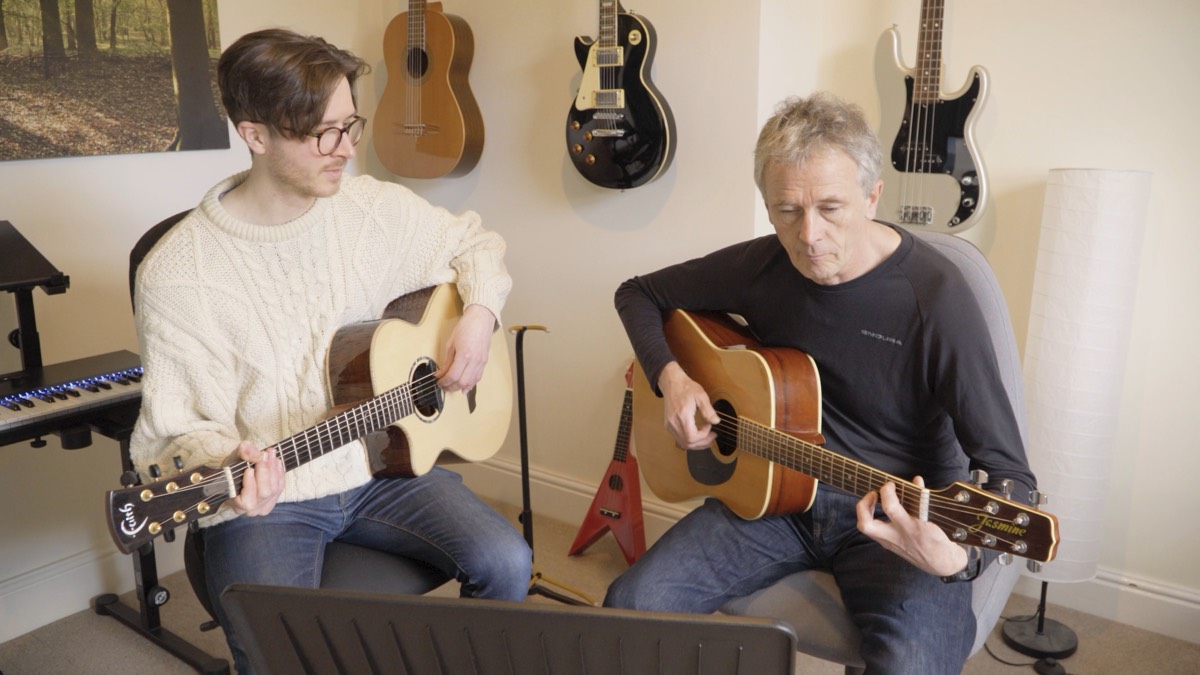
These days, when nobody's listening, I tend to pick the guitar up, play a chord and just see where it goes — improvising, sometimes singing, letting my mood lead the way. Every so often it stops being a series of decisions and turns into a proper flow state, where nothing else matters and you're only thinking about which sound you'd like to hear next. That's a true gift, and I feel very lucky to have access to it. It's also the thing I'd most like to hand on. Everything else — the chords, the technique, the reading — is how we get there.
I play at open mics, weddings and events, solo and with singers. I also write and produce a lot of my own music, as well as arranging original fingerstyle guitar versions of songs.
Still a student
I don't think you can teach well if you forget what it's like to be on the other side of the lesson, so I've made a point of never stopping being a student myself. I still take lessons in the things I want to be better at — flamenco in Spain, jazz guitar in Latin America — and I've been a learner in areas well beyond music too, from languages to dance. Partly that's because I simply love learning. But it also means I regularly experience other teachers and other styles of teaching, and every one of them teaches me something about how it feels to sit in the student's chair.
It keeps my understanding current, too. I know what the week you couldn't fit any practice into feels like, because I have those weeks myself. I know what it's like to care about something alongside a busy life and other interests — I have plenty of my own. That's exactly why my lessons come with clear goals and materials you can reach in a couple of taps: I know from my own practice what makes it easy to begin, and what quietly gets in the way.
Your first lesson, if you're wondering
Mostly I'll ask and you'll talk. I'd like to know what music you listen to, whether you've played anything before, what made you decide to start now, and what you'd love to be able to do. I'll also ask what else you're into and what a normal week looks like for you — because a practice plan that ignores your actual life is one you'll abandon within a couple of weeks. Then I'll share what I think the best route would be for you, what people usually find tricky about it, and any decisions we'll want to make together. And we'll make a start, so you leave with something to have a go at before next time.
“It was like I'd started a new life”
One of my adult students had been with me about a year when we came to a song built on chords she could play confidently. I asked whether she liked singing. “Well, I can't sing,” she said, “but I do sing along to the radio at home every day.”
So we gave it a go. It was a challenge at first — singing in front of another person is a genuinely exposing thing to do if you never normally do it. We spent a couple of weeks finding the notes she was singing and playing them back on the guitar so she could hear where they sat. And then she sang the whole song, in tune, all the way through.
I remember telling her: you can sing. You are singing, and you're hitting all the right notes.
The next week she told me it had felt like starting a new life. She'd spent decades with “I can't sing” as a settled fact about who she was — which so many of us do, usually because of something somebody said once when we were small. It had never been true. She'd simply never been given the space to find that out.
I think it's brilliant when we get to challenge one of those scripts we carry around about ourselves. It can be exhilarating, and it's one of my favourite things about this job.
Let's have a chat
Your first online lesson is free — forty minutes, no obligation.